What Is Walking Meditation and Why Does It Feel So Different From Sitting Still?

In this post, you'll learn what walking meditation actually involves, why it appeals to people who struggle with traditional seated practice, and how to integrate mindful walking into your daily routine without needing special equipment or a quiet room. Walking meditation offers a bridge between formal practice and everyday movement—something many practitioners find surprisingly accessible.
What Exactly Is Walking Meditation?
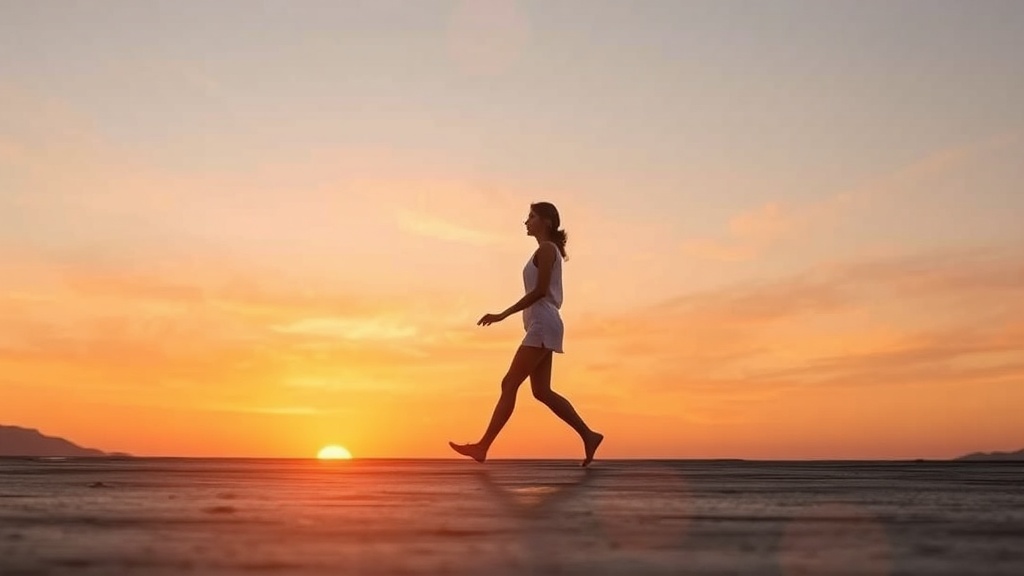
Walking meditation is exactly what it sounds like—meditation practiced while walking slowly and deliberately. Unlike a casual stroll where your mind wanders through grocery lists and tomorrow's schedule, walking meditation asks you to bring full attention to the physical experience of each step. You feel your foot lifting, moving through space, making contact with the ground. You notice the subtle shifts in balance, the swing of your arms, the rhythm of your breath syncing with your movement.
This practice has roots in Buddhist traditions (particularly Theravada and Zen lineages) where monks would walk mindfully between periods of sitting meditation. The walking wasn't a break from practice—it was the practice itself, just in a different form. Mindful.org provides an excellent introduction to the basic technique if you're curious about the traditional approach.
What makes walking meditation distinct is its accessibility. You don't need a cushion. You don't need to carve out a quiet corner of your home. You can practice in a hallway, a backyard, a park path, or even a slow lap around your living room. For people with chronic pain, restless energy, or simply an aversion to sitting still, walking meditation opens a door that might otherwise stay closed.
Why Does Walking Feel Easier Than Sitting for So Many People?
There's a reason walking meditation clicks for practitioners who've bounced off seated meditation. When you sit, your body is relatively still—there's not much sensory input to anchor your attention. Your mind, hungry for stimulation, starts manufacturing thoughts. Before you know it, you're mentally rehearsing arguments you had three years ago or planning dinner.
Walking gives your mind something to track. The sensations are constant and varied—the pressure on your heel, the flex of your ankle, the air moving past your skin. These physical anchors make it easier to notice when you've drifted into thought and easier to return to the present moment. You're not fighting your mind; you're giving it a job.
Research supports this intuition. A study published in the American Psychological Association's Monitor on Psychology found that walking meditation can reduce symptoms of anxiety and depression while improving overall mood. The combination of gentle physical activity and focused attention seems to engage different neural pathways than sitting practice alone.
There's also something psychologically freeing about movement. When you sit to meditate, there's often a subtle pressure to "get it right"—to achieve some state of perfect stillness or bliss. Walking removes that pressure. You're already doing something. The goal isn't to stop moving; it's to move with awareness. That shift in framing can dissolve performance anxiety that trips up beginners.
The Physical Benefits You Might Not Expect
Beyond the mental training, walking meditation offers genuine physical perks. The slow, deliberate pace improves balance and proprioception (your body's sense of where it is in space). For older adults, this can translate to reduced fall risk. For desk workers, it counteracts the postural collapse of sitting at a computer.
The practice also engages your vestibular system—the inner ear mechanism that governs balance. When you walk slowly and attentively, you're essentially giving your brain rich sensory data about movement and stability. This can have a calming effect on the nervous system, similar to how rocking soothes babies or why pacing helps people think through problems.
How Do You Actually Practice Walking Meditation?
Start small. You don't need to walk for an hour. Ten minutes is plenty to begin—and honestly, even five minutes counts if that's what you've got.
Find a path where you can walk back and forth without obstacles. Indoors works fine. Outdoors is wonderful if weather permits. The length of your path doesn't matter much; you'll be walking it repeatedly. Some people use a straight line of ten to fifteen paces. Others walk in a circle. The important part is creating a contained space where you won't need to handle decisions about where to turn or what's coming next.
Stand still for a moment. Feel your feet on the ground. Notice your posture. Let your arms hang naturally or clasp them loosely behind your back—whatever feels comfortable. Take a few breaths.
Then begin to walk—slowly. Much slower than your normal pace. As you lift your right foot, feel the weight shift to your left leg. Notice your knee bending, your heel peeling off the ground. Move the foot forward through space. Place it down—heel, ball, toes. Feel the contact. Shift your weight forward. Repeat with the left foot.
Your gaze should be soft, directed downward at about a 45-degree angle a few feet in front of you. You're not scanning for obstacles; you're simply not looking at distractions. When you reach the end of your path, pause. Turn mindfully. Walk back.
Thoughts will arise. That's not failure—that's your mind doing what minds do. When you notice you've been planning dinner or replaying a conversation, gently return your attention to the sensations of walking. No self-judgment required. Each return is the practice.
Common Challenges and How to Handle Them
People often worry they look strange walking slowly in public. If this bothers you, practice at home first. When you do take it outside, remember that most people aren't paying attention to you—they're absorbed in their own worlds. You could also try walking at normal speed but with heightened attention. It's a different practice but still valuable.
Restlessness is another common obstacle. If you feel antsy, check your pace. Sometimes walking too slowly creates tension. Speed up slightly until you find a rhythm that feels sustainable. Alternatively, shorten your session. Three minutes of focused walking beats ten minutes of mental struggle.
Some practitioners report dizziness or disorientation when starting walking meditation. This usually passes as your vestibular system adapts to slow, deliberate movement. If it persists, check that you're not holding your breath or locking your knees. Keep your movement fluid and natural.
How Can You Integrate Walking Meditation Into Daily Life?
The real magic happens when walking meditation stops being a formal practice and starts infusing ordinary movement. You don't need to set aside special time—you can bring mindful attention to walks you're already taking.
Try mindful walking during transitions. The walk from your car to your office door. The path from your desk to the coffee machine. The stroll to check the mailbox. These micro-moments accumulate. Harvard Health Publishing has documented how brief mindfulness practices can significantly reduce stress when practiced consistently.
Some people use walking meditation as a bridge between seated sessions and daily activity. After formal practice, they walk mindfully for a few minutes before checking their phone or diving into work. This creates a buffer—time for the mind to stabilize before re-engaging with demands.
You can also experiment with different speeds. Formal walking meditation is typically slow, but mindful walking at normal pace has its place too. The key is attention, not velocity. When walking quickly, you might focus on the rhythm of your breath matching your steps, or the feeling of air against your skin, or the sounds around you.
Nature walks offer particularly rich ground for practice. The varied terrain, the play of light through leaves, the sounds of birds or wind—these become objects of attention rather than distractions. You don't need to label or analyze what you encounter. Simply notice. A red bird. Cool air. Rough bark. The practice is bare awareness, not nature commentary.
When Walking Meditation Isn't the Right Choice
Walking meditation isn't superior to seated practice—they're different tools for different situations. If you're exhausted, walking might be too stimulating. If you're processing intense emotions, the movement might scatter your attention when you need stability. Traditional sitting practice excels at developing deep concentration and insight.
The goal isn't to replace seated meditation with walking. It's to expand your toolkit. Some days your body wants stillness. Some days it wants movement. Having both options means you're less likely to skip practice entirely when circumstances shift.
Walking meditation also isn't a replacement for exercise. The pace is too slow to improve your heart rate or build cardiovascular fitness. Think of it as mental training that happens to involve your legs, not a workout with a mindfulness component.
Start where you are. Use what you have. Do what you can. The path doesn't need to be long—the attention just needs to be sincere. Each step, fully felt, is complete in itself.