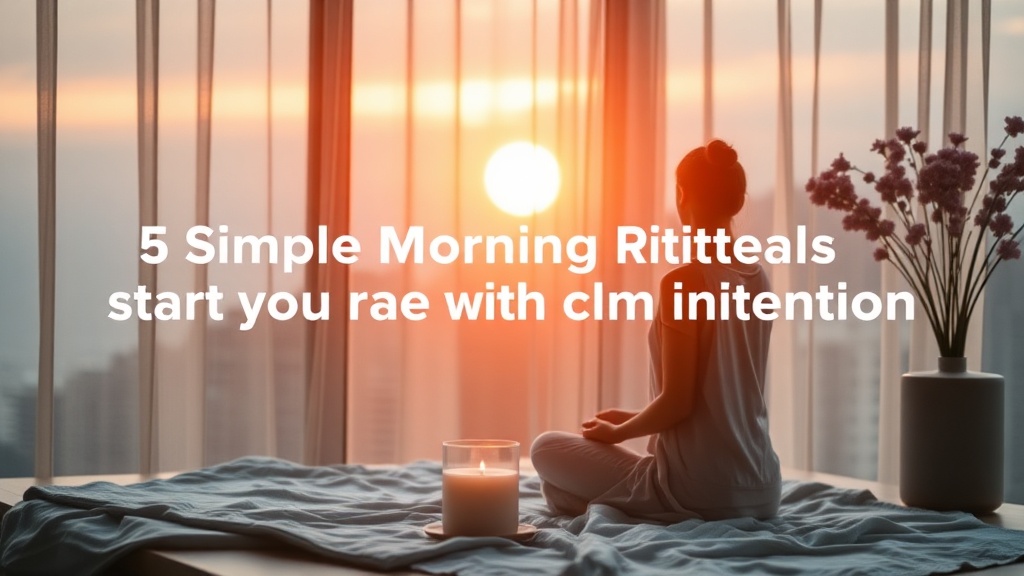
5 Simple Morning Rituals to Start Your Day with Calm Intention

Practice Three Minutes of Breath Awareness
Set a Single Intention for the Day
Savor a Mindful Drink Without Distractions
Move Gently with Stretching or Yoga
Write One Line of Gratitude
This post covers five simple morning rituals designed to bring calm and intention to the start of each day. Rather than rushing from alarm to inbox, these small shifts create space for clarity, lower stress levels, and set a steadier tone for everything that follows. Whether the morning currently feels like a frantic sprint or a sluggish fog, adding one or two intentional practices can reshape the entire rhythm of the day. The best part? None of these require special training, expensive equipment, or waking up before dawn.
Can a simple morning routine really change your whole day?
Yes—a short, consistent morning routine can lower cortisol levels and improve focus for hours afterward.
Research from Harvard Health suggests that intentional morning habits help regulate the body's stress response before the day even begins. It's not about perfection or adding another chore to the list. The goal is creating a buffer between sleep and the demands of work, family, and technology. Even five minutes of structured calm can shift the nervous system from reactive mode into something more grounded. (Think of it as a warm-up for the mind.)
When the day starts with a jolt—an alarm, a news headline, a flooded inbox—the brain stays in high alert. That increase in stress hormones can linger for hours, making small setbacks feel enormous. By contrast, a gentle morning ritual signals safety. The body relaxes. Decisions become clearer. Conversations go smoother. It's a subtle shift, but it compounds.
What are 5 simple morning rituals for starting with calm intention?
These five practices don't require special equipment or a 5 a.m. wake-up call. Pick one or two to start, then build from there.
1. Resist the phone for the first ten minutes
The moment the alarm sounds, most people reach for the screen. Here's the thing—those first minutes set the tone. Checking email or scrolling social media dumps cortisol into the system before feet even hit the floor. Instead, keep the phone across the room or use an analog alarm clock like the Lumie Bodyclock. Those ten phone-free minutes create a pocket of peace that feels surprisingly spacious.
During this window, the mind is still transitioning from sleep. It's vulnerable to whatever information comes in first. A demanding email can trigger anxiety for the next three hours. An upsetting headline can sour the mood before breakfast. Protecting this time isn't laziness—it's a boundary. If ten minutes feels impossible, start with five. The point is to wake up on your own terms, not on the internet's schedule.
2. Hydrate with presence
A glass of water isn't revolutionary. But drinking it slowly—feeling the temperature, noticing the sensation—turns a biological necessity into a mindful pause. Warm water with lemon works well, or a cup of herbal tea from Traditional Medicinals. The catch? Don't multitask. Don't scroll, don't plan the day. Just drink. This small act anchors attention in the body instead of the to-do list.
Overnight, the body loses fluid through breathing and sweat. Rehydrating first thing supports energy, digestion, and mental clarity. Yet most people gulp coffee while checking calendars, barely registering the liquid going down. Sipping mindfully breaks that autopilot pattern. It brings attention back to the physical self—the weight of the mug, the warmth in the throat, the gentle settling of the stomach. For those in colder climates (Halifax winters come to mind), a hot cup of peppermint or ginger tea from Celestial Seasonings adds comfort along with hydration.
3. Move gently
You don't need a full yoga session. Five minutes of stretching, cat-cow poses on a Manduka Pro mat, or a short walk around the block in Halifax's South End gets blood flowing without spiking adrenaline. Movement wakes up the joints and signals to the brain that it's time to be alert—but calm. Worth noting: outdoor morning light helps regulate circadian rhythms, making it easier to fall asleep later that night.
Gentle movement also releases tension that builds during sleep. A tight neck, stiff shoulders, or a cramped lower back can all improve with simple stretches. Try standing side bends, shoulder rolls, or a slow forward fold. The goal isn't fitness. It's presence in the body. For those who prefer guidance, a short session with the Mayo Clinic's meditation and movement resources offers accessible starting points. Walking works too—even ten minutes around the neighborhood, feeling the air on the skin, counts as a full ritual.
4. Practice intentional breathing
Breathwork is free, portable, and immediate. A simple box breathing pattern—in for four counts, hold for four, out for four, hold for four—can steady a racing mind in under two minutes. Apps like Insight Timer offer free guided morning breath practices, though a timer on the stove works just as well. The key is consistency, not complexity.
Breathing affects the nervous system directly. Short, shallow breaths tell the body there's danger. Slow, deep breaths say the opposite. Box breathing is used by everyone from Navy SEALs to anxiety therapists because it works fast and requires zero equipment. Another option is the 4-7-8 technique: inhale for four, hold for seven, exhale for eight. Some people find the longer exhale especially soothing. If morning congestion makes deep breathing uncomfortable, simply focusing on the rise and fall of the chest for one minute still brings benefits. The mind wanders—that's normal. Each return to the breath is the practice.
5. Set a single intention
Before opening the laptop or starting chores, write one sentence about how to approach the day. It might be "respond rather than react" or "find one moment of beauty." The Five Minute Journal from Intelligent Change provides a structured format, but any notebook will do. This isn't about goal-setting. It's about choosing a mindset.
Intentions differ from to-do lists. A to-do list focuses on outcomes—emails sent, errands run, meetings attended. An intention focuses on process. It asks, "Who do you want to be today?" That question shapes dozens of small decisions. When traffic is bad or a colleague is short-tempered, the intention becomes a touchstone. It doesn't require perfection. Missing the mark is part of being human. But having a north star—even a simple one—makes the day feel more purposeful and less like a series of reactions.
How long should a morning mindfulness routine actually take?
Fifteen to twenty minutes is enough for most people to feel a noticeable difference.
You don't need an hour. In fact, trying to build an elaborate routine often backfires. The comparison below shows how different time commitments break down:
| Time Available | Sample Routine | Best For |
|---|---|---|
| 5 minutes | Phone-free + 3 breaths + 1 intention | Busy parents, shift workers |
| 15 minutes | Hydration + stretch + 5-minute meditation | Most beginners |
| 30 minutes | Walk + journaling + breathwork | Those easing into deeper practice |
| 60+ minutes | Full yoga + meditation + meal | Retirees or dedicated practitioners |
That said, consistency matters more than duration. A five-minute routine done daily outperforms a sporadic hour-long session. Many people find that starting with just five minutes builds momentum naturally. The ritual becomes enjoyable, not burdensome. From there, expansion feels like a treat rather than a task. It's also worth remembering that mornings look different on weekends, during travel, or when children are sick. Flexibility keeps the practice alive. Rigidity kills it.
What morning ritual works best for anxiety?
Breathwork and phone-free mornings tend to have the strongest immediate impact on anxiety symptoms.
According to the American Psychological Association, controlled breathing activates the parasympathetic nervous system, which directly counteracts the fight-or-flight response. Pairing that with a no-phone buffer removes the common trigger of notifications and urgency. For people dealing with generalized anxiety, starting with just box breathing and delayed screen time often feels manageable—and the effects show up quickly.
Anxiety thrives on rushing and uncertainty. A morning ritual introduces predictability. The body learns that waking up doesn't mean danger. Over time, this predictable safety cue can lower baseline anxiety throughout the entire day. Some people add a weighted blanket to the first five minutes of wakefulness, or use the Calm app for a short guided body scan. Others prefer complete silence. There's no single right answer, but the combination of reduced stimulation plus intentional breathing is hard to beat.
Which tools are worth using for morning mindfulness?
A few well-chosen items make the routine smoother, but gear isn't required. The Insight Timer app offers thousands of free meditations. A Manduka Pro yoga mat lasts for years and provides stable cushioning. For journaling, the Moleskine Classic Notebook or The Five Minute Journal both work beautifully. In Halifax, a morning walk through the Halifax Public Gardens offers a real-world alternative to any app—no subscription required.
Other useful tools include a simple glass carafe for bedside water (no need to walk to the kitchen), a sunrise alarm clock like the Philips SmartSleep Wake-up Light, and comfortable cotton loungewear that makes stretching feel inviting. Technology can help, but it can also complicate things. If buying gear becomes a distraction from actually doing the practice, strip it back. The breath is always available. The body is always present. Everything else is optional.
Morning rituals aren't about becoming someone else. They're about giving the day a softer beginning. Start small. Stay consistent. See what sticks.